With Le Mans fresh in our minds, it was only fitting that I focus on a brute built for that race in this look at another speed icon. Le Mans is such an iconic event that it, obviously, creates a challenge in picking just one example.
However, the first cars to get rid of are those that we all already know about. I’m talking the various incarnations of the 917, 956, GT40, and so on. Sponsors such as Gulf, Martini, and Rothmans have long supported the race—but their cars tend to wear variations of the same theme year over year. Legendary liveries, yes, and these cars have engraved themselves in our minds ever since the Le Mans bug first bit.
Instead, I’ve chosen to go with a car that may not be so instantly recalled as the aforementioned ones: the BMW M1. This car has a lengthy—although best forgotten—track record at Le Mans, where it raced for eight years through the ’80s.

During these eight years, only seven M1s had classified finishes, out of a staggering twenty-two entries. It must be said that a lack of reliability was the cause of such poor results, but at least there were two class wins among all the DNFs.
Which is fine, because I’m interested in something else: its looks. The M1 is an undeniably stunning design, although I do remember thinking when seeing it for the first time that the tail-lights were too “7 Series-like”. I’m over that, now.
It never really mattered what livery it came in, given that its low and wide Giugiaro design had such a menacing, yet typically restrained German aggression that you could just chuck a tin of paint over it and say job done. I’ll be leaving out the M1 Pro Car (with the factory M-Sport stripes, which I love) and the Art Cars of Andy Warhol and Frank Stella too. And no, I’m not referring to Warhol’s car when mentioning chucked tins of paint—I adore that car and no sponsor liveries can ever compete with the art cars.
It’s like comparing a bespoke tailor to The Gap: they play by completely different rules.
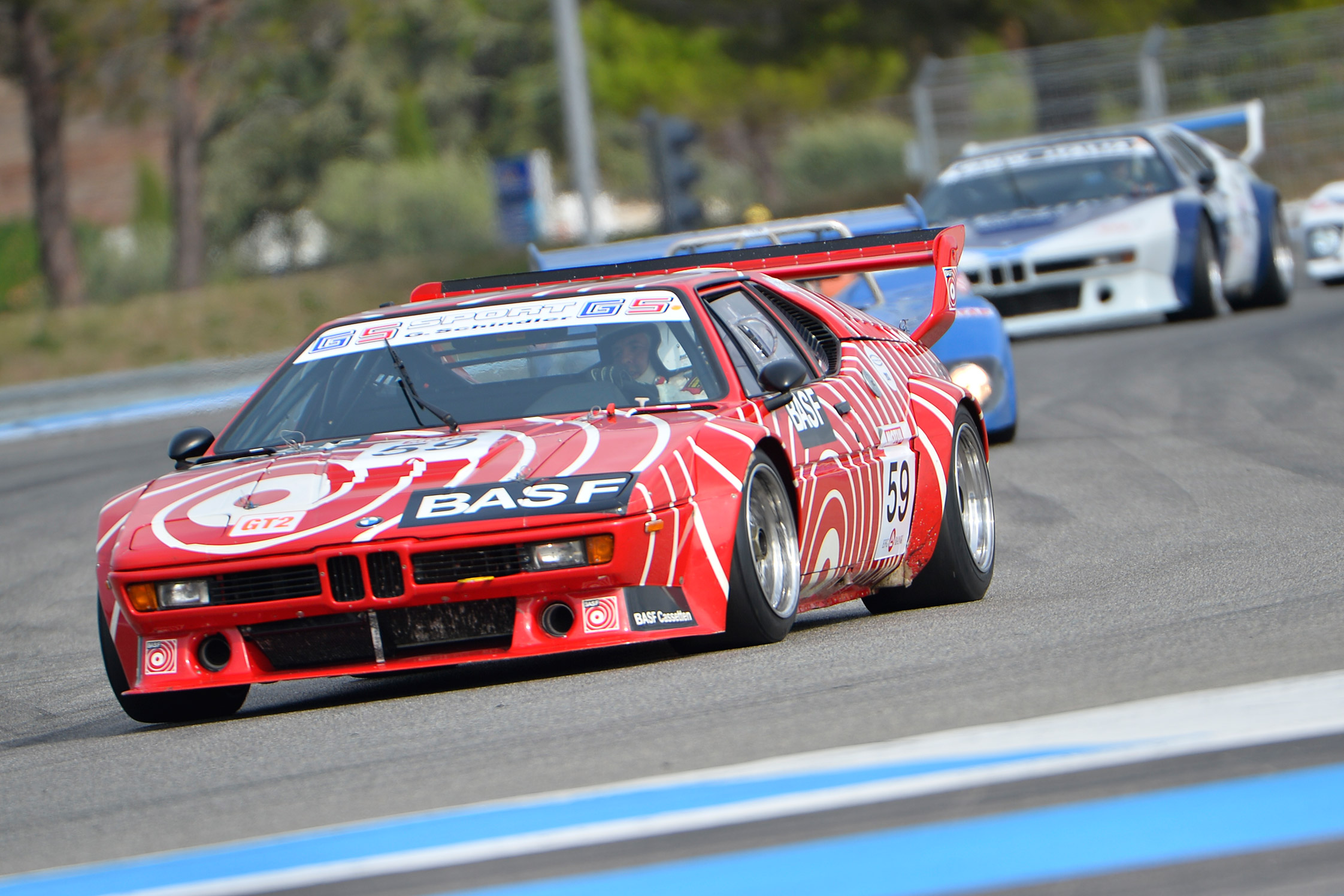
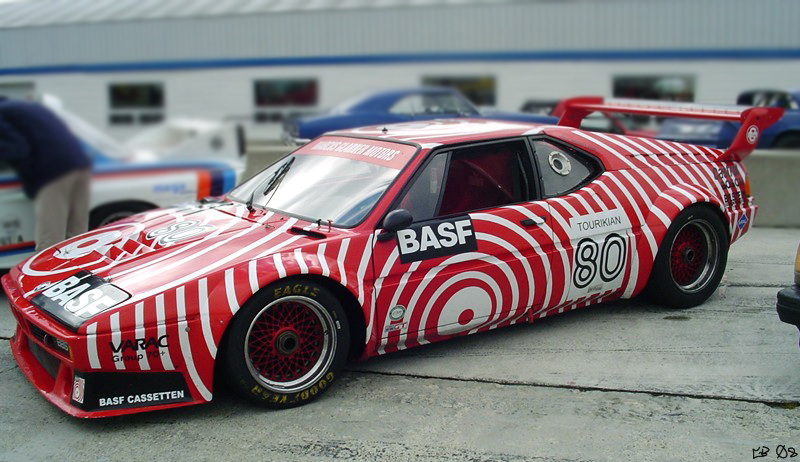
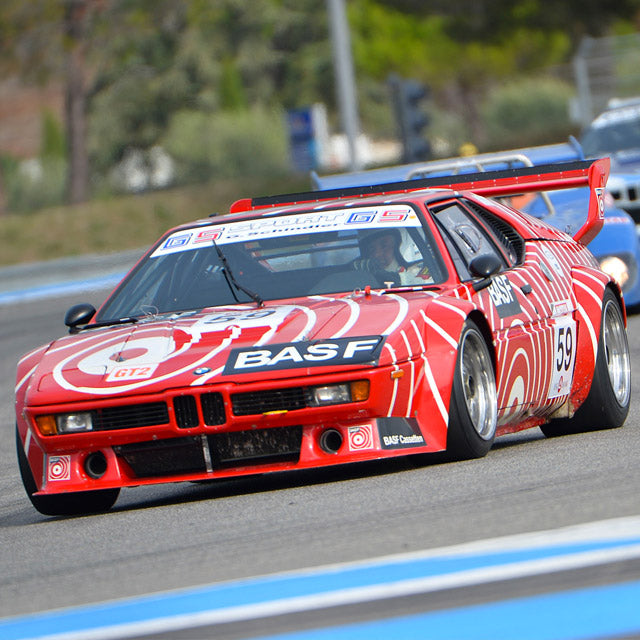
The M1 I have chosen to feature is the 1981 Sauber-entered, BASF-sponsored car.
The Sauber M1 is a car that’s easily forgotten when thinking about Le Mans icons, but as soon as you’re shown a picture it’s: “Hello, I remember you!” For a certain generation, i.e. mine—and 41 years old this month—cassette tapes played a big part in our younger lives.
When seeing a car draped in a logo of something you owned, as opposed to an oil or cigarette company you’ve never heard of (and certainly never spent your pocket money on), there was an instant connection. As a result, I’d always crave after a 10-pack of BASF 90 blank tapes, instead of the normal TDK rubbish.


Anyway, enough regressing: the BASF M1 is both iconic and notable because it looked like a giant cassette case flying around the track (when it wasn’t broken, of course). It’s so perfectly from 1981 that I fail to see what else the designers could have done.
The ever-decreasing circles in the company’s older, bolder logo shout “spread me all over the car, as big and bold as possible’, thus making the M1 stand out as much as a BASF cassette in a jumbled glovebox, full of untitled mix-tapes.
Now the largest chemical producer in the world, BASF has, in the past, produced consumer products—for which the M1 advertised. Even more fitting, it was the first company to create magnetic tape, way back in 1928 for its inventor, Fritz Pfleumer. Its first factory for making magnetic tape was built some years later, in 1966, making audio and video cassettes, electronic storage media, and printing plates for the graphics industry.
Now firmly back into chemical production, there’s very little evidence of BASF as a consumer-facing company, unless you’ve got a box of video or audio cassette tapes in the basement.
It isn’t, however, quite that easy to just apply the BASF logo to a car, as those ever-decreasing red circles have to end up somewhere, and getting them to match across the various sides and surfaces of the car is no mean feat—it’s a constant issue in my own art work!
Not only that, the idea of circles on a car hardly emphasises speed, nor that sporty, aggressive stance. No one ever wants to say of a race car, “It looks like it’s sitting still while speeding past!” The 1982 Sauber SHS C6 Prototype is a prime example of this crime, probably because it had much more bodywork to cover.
No, the M1’s success as a package comes back down to that Germanic (Italian-penned) subtle, aggressive wedge, smothered with the BASF branding. As with the Alitalia-liveried Lancia Stratos in the first feature, the designs marry together perfectly.
If cassette cases opened end-on, you’d have a wedge. And if your imagination stretches far enough, that case may be all you need to remember this perfect, not to mention perfectly ’80s, livery.


Image Sources: motorlegend.com, startinggrid.wordpress.com, mikereidphotography.com, vintagecassettes.com, blogspot.com, freevector.com